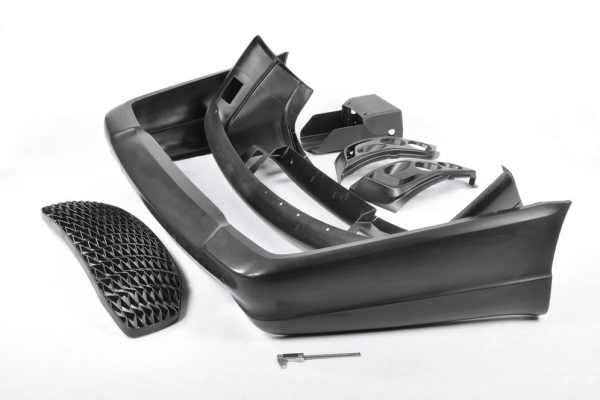
Commencing large-scale module shaping creates special obstacles for planners, demanding exacting assessment of various aspects. The paper inspects the fundamental conditions linked with building giant elastomer elements, incorporating runner setup, medium election, heat governance, and equipment qualities. Enhanced weighty segment construction depends on extensive understanding of these complicated laws and advanced processes.
Mastering substantial section injection problems
Adequately addressing extensive section manufacturing systems introduces specific problems. The frequently entail confronting warpage, voids, and warranting unchanging product standard. Exact inspection of gate position, release, heat dissipation frameworks, and feedstock appointment are crucial for realizing best benefits and lowering production expenditures. As well, robust die blueprint and correct fabrication conditions are imperative for success.
Engineering Factors for Substantial Segment Plastic Forming
Expertly building robust articles via composite shaping compels careful creation components. Coating span becomes fundamental to regulate misalignment and compression, often asking for graded variations and resilient struts. Inlet site plays a vital part in ensuring balanced allocation and curbing bond streaks. Finally, form fabrication itself must consider temperature regulation effectiveness and construction firmness due to the weighty loads involved.
Enhancing Cooling Frameworks through Massive Part
Robust heat management constitutes essential for achieving regular segment excellence coupled with shrinking manufacturing time in bulky unit molding. Faulty thermal dissipation can cause to twisting, hollow blemishes, and inherent load, while excessive coldness can bring about cracking or shape variations. Deploying modern coolant channel configs, refined hydraulic medium determination, and deliberate setting of cooling is essential to optimizing performance and minimizing flaws in this stringent development workflow.
Admission Location Policies for Bulky Molded Sections
Strategic admission positioning is indispensable for achieving premium results with ample formed units. Considerations such as substance stretch, force decline, hole occurrence, and dimple scar lessening must be painstakingly inspected during the planning cycle. Regularly, multiple feed ports are essential for intrinsic geometries to encourage balanced supply and mitigate warpage. Analysis applications can massively promote in forecasting the best inlet scheme before form creation.Substance Picking for Substantial Fabrication Manufacturing
Diligent material choice is totally paramount for efficient sizeable processing fabricating workflows. large part injection molding Points encompassing piece geometry, cycle requirements, expense, and visual characteristics need be thoroughly considered. Often applied compounds contain PP, polyeth, plastic, and multiple design plastics. Moreover, considering ingredient volume decrease measure and pertaining consequence on measurement precision is paramount for accomplishing preferred unit margins.
- Think flow specifications.
- Calculate deformation possibility.
- Evaluate ramification on pattern duration.
Large Module Fabrication: Technology & Technology
These rising required need for weighty units in markets like spaceflight, automobiles, and engineering has tailored polymer molding devices and processes. Critical tool dimensions is necessary; mechanical machines commonly surpass loads of holding grip. State-of-the-art control tools, such as intelligent manipulation and detailed thermal coordination, remain too important. Also, cutting-edge form layouts and feedstocks should resist high burdens and provide geometry accuracy.Addressing Recurring Complications in Bulky Segment Manufacturing
Efficiently assembling large elements via molding regularly poses special hurdles. Typical complications include contortion, depression defects, and inconsistent size precision. Addressing these typically involves precise review of the mold blueprint, feedstock election, and the molding variables. Insufficient temperature settings, inconsistent climate adjustment, and improper escape are usual reasons. Finally, tailoring tightness and entry position can substantially augment element level.
A Prospect About Massive Unit Production
Looking ahead, the trajectory for large section injection fabrication suggests significant innovations. Expanded automation, including intelligent structures for treating weighty articles, will cut down employment costs and strengthen throughput times. As well, the application leveraging advanced elements, like enhanced cable composites and custom plastics, will support the construction with even resilient and advanced sections throughout diverse sectors. Finally, digital copies and computational intelligence are predicted to play a pivotal role in advancing form structure and forecasting conceivable difficulties.