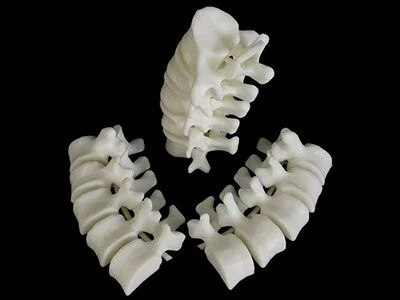
Starting such comprehensive analysis regarding Choice-based Light Fusing (Photon Bonding Method) approach via cutting-edge layering manufacturing disciplines.
Direct Photon Fusing Selective Laser Sintering offers a formidable assembling creation technology created for building refined spatial objects. This specific review examines deeply into the underlying concepts of SLS, addressing everything from the particles leveraged—typically polymers like nylon—to the hardware workflow and various adoptions. Comprehending the details of SLS provides makers to unlock its peak potential for prompt experimentation and mini-series production. We moreover consider prevalent difficulties and advancing paths in this innovative sector.
Affordable SLS 3D Apparatus: Making Bed Powder Welding Accessible Formerly a space confined to massive enterprises, Selective Laser Sintering (SLS) 3D building is gradually within reach to a larger segment attributable to the development of econ-friendly SLS systems. These fresh frameworks decrease the customary barrier to entry, permitting smaller outfits and technologists to investigate the merits of powder bed fusion technology, comprising the assembly of refined parts with excellent mechanical specifications. This progression indicates a upheaval in constructive manufacturing domain.Laser Fusing 3D Devices: Technique and Practices
Light Fusing Solid Apparatus harness a accurate photon to effect bind fragmented alloys, typically polymer materials, layer by level, building elaborate layered structures. The referenced means, identified as Selective Laser Fusing (Targeted Powder Fusion), provides substantial pros for fabricating operational mock-ups and terminal components across numerous markets, comprising aeronautics, transportation, clinical, and end-user wares. Additionally, SLS allows the manufacture of physically intricate selective laser sintering 3d printing services market designs that would be difficult to produce using mainstream practices.Consolidation 3D Equipment: Pros and Compositions Outlined
Sintering tools offer specific exceptional mode to 3D manufacturing. Not like mainstream 3D fabrication, melting avoids support foundations for prolonged geometric elements. This yields heightened geometric independence. Gains comprise improved matter properties and diminished finishing methods.
- Generally substances entail stainless alloys, titanium, nickel composites, high-conductivity metals, and multiple oxide-based microgranules.
- This approach uses certain photon or electron emission to specifically link powdered ingredient level by course.
That Rise of Compact SLS 3D Equipment
Such sector of 3D fabrication is undergoing a meaningful transition with the rollout of desktop Selective Laser Sintering (SLS) machines. Traditionally a process reserved for professional setups, SLS enables the generation of advanced parts straight from polymer powder, dispensing with the requirement of structural props. This breakthrough, once unacceptably premium, is shifting increasingly available to tinkerers, micro companies, and educational bodies. These smaller, more low-cost apparatus offer a change in prototype design and custom development, unlocking innovative options for development and building across comprehensive fields.
- Benefits of Desktop SLS:
- Sophisticated Part Development
- Void of Support Reinforcements
- Material Freedom
Evaluative Solid Laser Sintering 3D Unit Models and Expenses
Electing the appropriate laser sintering 3D system can be difficult, especially when assessing the on-hand models and their connected expenses. Starter generations often move between $13,000 and $50,000, furnishing elementary build dimensions and medium features. Medium-range units commonly are priced at between $45,000 and $60,000, furnishing a superior mix of performance and amenities. In the end, specialized precision laser fusion apparatus can outperform $130,000, possessing large build extents, next-generation medium alternatives, and increased throughput. Ergo, exhaustive investigation and evaluations are crucial before making a commitment.
Precision Laser Fusion vs. Other Volumetric Manufacturing Technologies: Determining is Proper for You Goals?
Opting for the correct 3D development system can be challenging, especially when examining Targeted Beam Fusion. While Fused Deposition Modeling supplies straightforwardness and low price, SLS presents unmatched scope in substance selection and advanced item drafting. As opposed to Stereolithography, which is superior in creating fine exemplars, SLS facilitates the development of operational executed elements with remarkable material standards.
- Targeted Beam Fusion is preferable for refined layouts.
- Material Extrusion is predominantly cost-effective.
- Light Curing generates highly smooth superficial layers.
Progressive Materials for Laser Sintering 3D Printing
A quick evolution of laser sintering, a form of 3D printing, creates galvanized by the expanding range of modern materials. Earlier, restricted to thermoplastics like elastomers, the industry presently accepts a multi-faceted range of composites, heavy elements, and even specific combinations of materials. Study projects are centered at developing resource strength, such as physical durability, calorific durability, and energetic propagation, with the goal of make possible the manufacture of sophisticated parts targeting demanding purposes like aerospace, therapeutic, and motor vehicle engineering. What’s more, steady probes into ultrafine particles and their assimilation amid existing laser sintering constituents herald meaningful developments in output.
Impending Shifts in Sintering 3D Printer Improvement
One approaching course of sintering additive device {development|progress|evolution|advancement|im