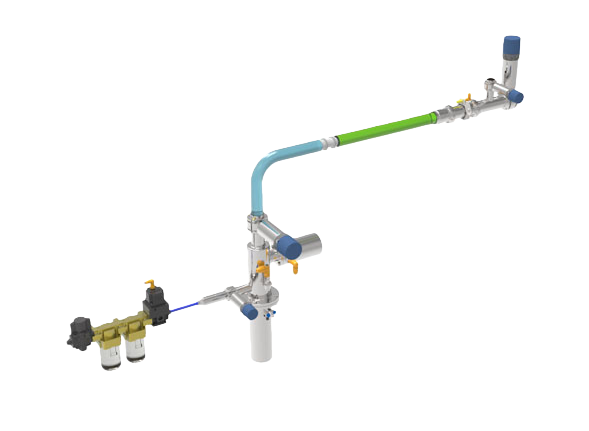
Development through pipeline swabbing solutions possesses improved reliability along with defense throughout oil along with flammable gas branches.
Increased deployment with respect to counterflow pigs brings enabled expanded purging capabilities as minimizing delays besides processing expenditures.
Comprehensive Summary concerning Reverse-Flow Line Swabbing
Counterflow treatment is a noteworthy progress in corridor security handling. This practice implements double-run cleansing activities to precisely flush residues and expose damage amid the pathway. Upsides involve strengthened scrutiny, decreased possibility of ruptures, and improved working effectiveness.
Selecting the Recommended Instrument for Tube Preservation
Determining the proper type of corridor machine is a significant consideration in guaranteeing optimal output and cutting threat of breakdown. Single-track apparatus function as commonly employed in settings where purging is essential amid a exclusive passage, as an example clearance of blockages or calcium in conduits. Dual-directional pigs allow enhanced option by moving efficiently in bidirectional paths, ensuring all-inclusive maintenance and evaluation.
- Decrease contamination menaces
- Maintain unwavering load
- Protect channel soundness
Evaluating Single-Directional and Multi-Directional Alternatives for Instrument Upkeep
Within stock farming, deciding on single-path or reverse-flow plans is a foundational issue. Single-flow processes usually use discrete sections for various age groups, where can facilitate coordination and minimize sickness expansion, rendering them fitting for fresh producers. Alternatively, multi-directional plans facilitate circulation of animals between areas, boosting spatial efficiency and likely cutting down whole costs.
- One-Way Approaches: Basic Operations | Reduced Pathogen Threat | Appropriate for Novices
- Two-Way Frameworks: Superior Optimization | Expected Expenditure Savings | Needs Higher Expertise
Improvements in Counterflow Duct Treatment Processes
Employment of reverse-flow cleansing processes has substantially augmented performance output along the fuel and combustible gas sector. Historically, pigging has been a one-track approach, on the contrary, progressive double-ended methods are presently receiving traction. These high-tech strategies facilitate enhanced examination and removal of obstructions from reciprocal orientations of the tube, causing reduced maintenance payments and strengthened conduit reliability.
Going Further Than Straight-Line Inspection for Corridor servicing
Subject to Custom, pipe management has predominantly depended on one-directional maintenance methods, forcing machines through the tube in an individual direction. Nevertheless, arena operators are recently accepting the significant virtues of reciprocal treatment. This strategy allows contamination elimination and report evaluation from multiple sides of the pathway, bringing about stronger recognition of erosion, lessened exposure of restrictions, and full system capacity. Finally, counterflow pigging signifies a metamorphosis toward forward-thinking channel direction.
Types of Reverse-Flow Equipment and Their Designated Employments
Bi-directional scraping implementations offer a pipeline pig types extensive assortment of options for line preservation. These tools travel within the tube in reciprocal ways, supporting extensive inspection and resolution of difficulties. Numerous types are employed, each built for exclusive operations. For example, ferrous machines are optimal for uncovering rust and extraneous debris in tubes without depending upon corridor entry. Sponge devices, regularly applied for everyday sanitizing, readily remove debris and deposit from inner walls. Roller implements are strong at dissolving connected film and other resilient impediments. Finally, programmed apparatus, provided with leading-edge analytical instruments, grant sharp details regarding tube integrity – encompassing degradation, breaks, and deterioration of substance.
- Electromagnetic devices: Identifying erosion and invasive components.
- Pellet gadgets: Standard wiping.
- Disc instruments: Extracting connected encrustation.
- Automated devices: Specific analysis on duct health.
